Keynotes
Künstliche Intelligenz kann Entwickler produktiver machen, keine Frage. Doch wie geht man damit um, wenn Sprachmodelle überzeugend falsche Antworten liefern oder autonome KI-Agenten eigenständig handeln? Gerade bei Embedded-Systemen, für die Safety und Security unverzichtbar sind, braucht es neue Sicherheitskonzepte und einen kritischen Umgang mit den Möglichkeiten künstlicher Intelligenz.
Hier setzen die Keynotes des ESE 2026 an. Am 1., 2. und 3. Dezember beleuchten Prof. Dr. Mario Trapp, Dr. Maximilian Walter und Ronnit Wilmersdörffer, wie sich intelligente Systeme absichern, Fehler von Sprachmodellen erkennen und autonome KI-Agenten kontrollieren lassen.
Dienstag, 01. Dezember 2026, 12:35 Uhr
Reimagining Safety Engineering for AI in Cognitive Systems –
From Functional Safety to Safe Intelligence
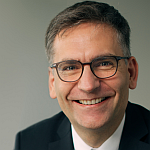 |
Artificial Intelligence is transforming software-intensive products from embedded devices to autonomous cyber-physical systems. While traditional safety engineering has been highly successful in assuring deterministic software and hardware, AI introduces fundamentally new challenges related to uncertainty, learning capability, emergent behavior, and adaptation. This keynote discusses why established safety practices must evolve and how safety engineering can be reimagined for cognitive systems. Drawing from recent advances in AI assurance, resilient system design, and safe intelligence engineering, the talk explores the transition from functional safety toward the broader challenge of assuring intelligent behavior in software-defined systems. Prof. Dr. Mario Trapp is Director of the Fraunhofer Institute for Cognitive Systems IKS and Full Professor at the Technical University of Munich (TUM), where he holds the Chair of Engineering Resilient Cognitive Systems. As an internationally recognized expert in safety assurance and resilience engineering for AI-based and cognitive systems, his work focuses on enabling trustworthy, safe, and dependable intelligent technologies. |
Mittwoch, 02. Dezember 2026, 12:35 Uhr
Sprachmodelle und Athanasius Kircher –
Genie oder Scharlatan?
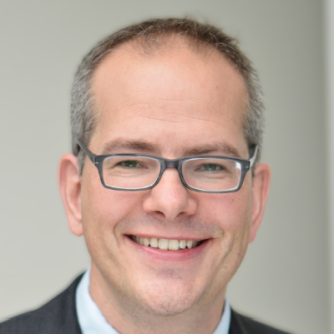 |
Athanasius Kircher galt im 17. Jahrhundert als der Universalgelehrte. Aus heutiger Sicht enthalten seine Werke einerseits erstaunliche Thesen, z.B. dass Krankheiten von winzigen Lebewesen verursacht werden könnten. Andererseits enthalten sie auch viele falsche Behauptungen, z.B. dass Bienen "jungfräuliche" Tiere sind, die keine Eier legen. Daneben gibt es Aussagen, die glatt erfunden worden sein müssen, z.B. Kirchers "Übersetzungen" altägyptischer Hieroglyphen. Es lassen sich also erstaunliche Parallelen zu Sprachmodellen (Large Language Models, LLM) ziehen: Wie Kircher verfügen diese über eine große Fülle an universellem Wissen, verstehen alle Sprachen, sind in der Lage, geschliffen zu formulieren, und können durch Deduktion selbstständig neues Wissen synthetisieren. Aber genügt das? Welche Lehren lassen sich aus der Geschichte der Wissenschaft, von Athanasius Kircher über die Aufklärung bis hin zum empirischen Falsifikationsprinzip ziehen? Wie müssen wir LLMs einsetzen, um nicht die Fehler des 17.Jahrhunderts zu wiederholen? Dr. Max Walter ist Informatiker und Fachexperte für Functional Safety bei Siemens Digital Industries. Er ist federführend beim Design wichtiger Produkte für die Sicherheitstechnik, z.B. STEP 7 Safety Advanced, PROFIsafe, OPC UA Safety, SIMATIC Safe Kinematics, SafeVelo und SIMATIC AX. 2024 wurde er vom Siemens-Vorstand mit der Ehrung "Inventor of the Year" ausgezeichnet. |
Donnerstag, 03. Dezember 2026, 12:35 Uhr
Future-Proofing European Industry –
How Agentic AI Challenges Cybersecurity and Sovereignty
 |
The evolution of artificial intelligence away from passive, prompt-based assistants toward autonomous agents designed to make independent decisions, use digital tools, and engage in long-term planning presents companies with major new challenges alongside opportunities: How can such systems be effectively secured against cyberattacks and loss of control, and how can critical dependencies be managed and mitigated? For Europe, this technological leap occurs at a critical geopolitical turning point. This presentation highlights the questions companies should ask themselves regarding the deployment of agentic AI, how compliance shifts from a bureaucratic hurdle into a strategic security requirement, and the role European regulation plays in this process. Ronnit Wilmersdörffer is an expert and speaker on European AI policy. Her presentations explore Artificial Intelligence from technological, sociological, geopolitical, and economic perspectives, providing the audience with insights into the discussions at the absolute forefront of European and global AI governance. In doing so, she clearly highlights the role that facts, assumptions, and narratives play in shaping the discourse. Her keynotes seamlessly blend this conceptual lens with the essential practical relevance drawn from her daily work as a compliance officer in the AI industry. |