Workshop: The Skill Transition for the Energy Transition – what does the District Heating and Cooling Sector Need?
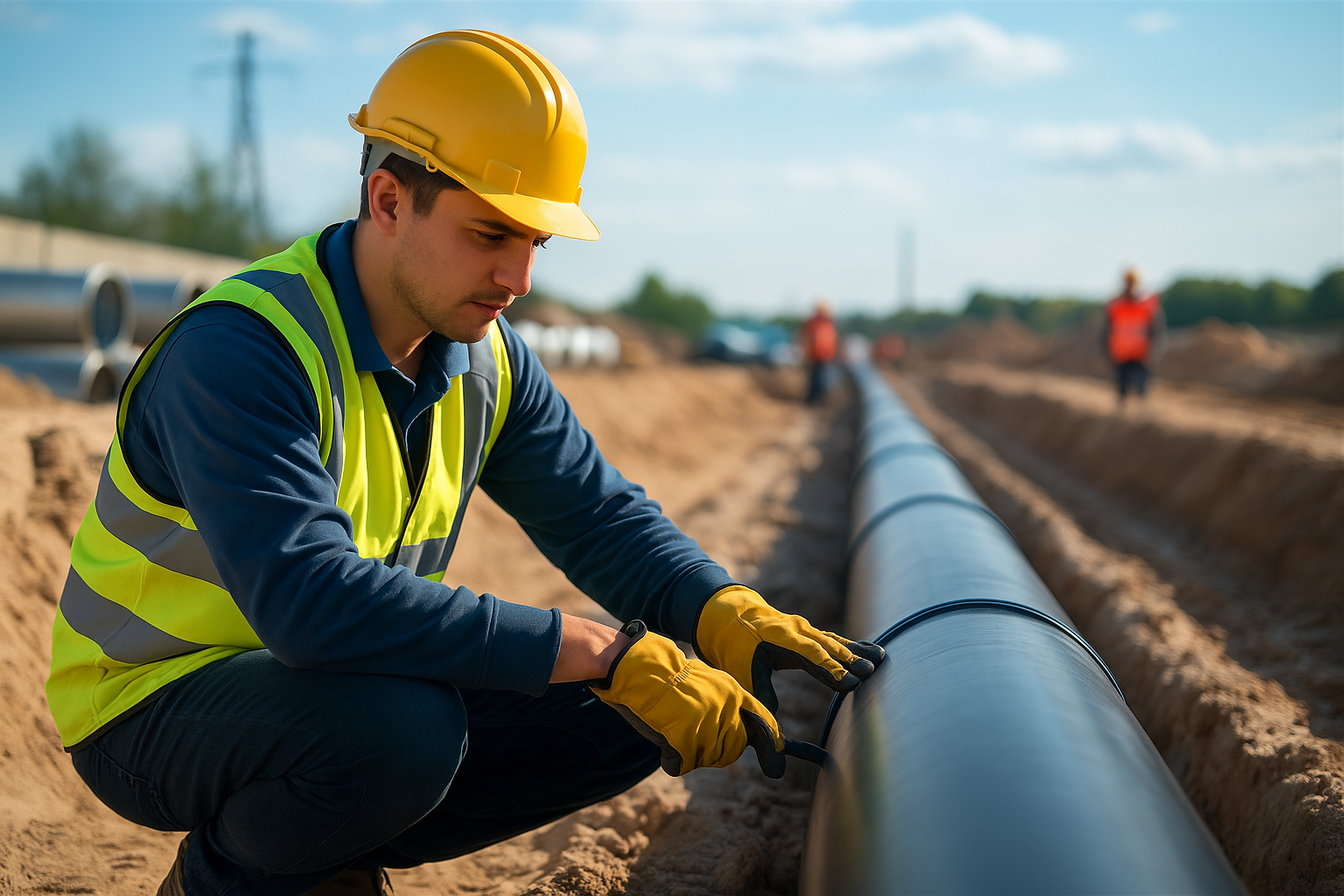
The energy transition requires more than technology – it requires a skilled workforce. The workshop “The skill transition for the energy transition – what does the district heating and cooling sector need?”, taking place at ISEC 2026, addresses this challenge by focusing on qualification needs, innovative training formats and successful education initiatives for district heating and cooling across Europe.
In short expert pitches, speakers from Austria, Germany and European organisations will present vocational training programmes, academic teaching approaches and transnational initiatives such as Skills4DHC. Contributions will be given by Katalin-Andrea Griessmair-Farkas (FGW), Thomas Pauschinger (AGFW), Dominik Rutz (WIP), Alice Denarie (POLIMI), David Bertermann (Soil2Heat) and Sara Comparetto (Euro Heat & Power).
In the subsequent World Café, participants will jointly discuss future skills requirements and the framework conditions needed to accelerate the heat transition.
This workshop offers a unique opportunity to bring together international experience, link with ongoing initiatives such as Skills4DHC, and jointly shape a skilled and forward-looking DHC workforce.
Workshop: Austria–China Collaboration on Low-Carbon Façade Systems and Building Decarbonisation

The workshop invites participants to examine how Austria and China are jointly advancing the decarbonisation of the built environment through state-of-the-art façade technologies and integrated energy concepts. Moving beyond the presentation of isolated research findings, the session provides a focused exploration of how renewable-energy-active façades, serial renovation methodologies, digital planning environments, and low-carbon design strategies can be synergistically applied to deliver scalable, high-impact solutions. Participants will gain a deeper understanding of how complex façade and fenestration systems can significantly reduce thermal loads, enhance on-site energy generation, and accelerate climate-neutral renovation, particularly in dense urban settings.
Through concise impulse presentations and scientific discussion, the workshop will highlight transferable insights from ongoing Austria–China collaborations: Which advancements in complex façade and fenestration systems are approaching market readiness? How do technological concepts perform across contrasting climate zones? And in what ways can digital twins and advanced simulation workflows support robust design and decision-making? The session aims to equip attendees with evidence-based knowledge and applicable methodologies that can inform future research, policy development, and large-scale implementation efforts.
Beyond hydrogen-based CCU concepts: Solar carbon recycling as a future CCU alternative. Potentials and challenges
The workshop will discuss and current H2 based CCU routes with its potential and challenges and compare two novel pathways:
1) new H2 production technologies (e.g. direct photochemical H2 production or multiproduct solar collectors for H2 production) as near future potential,
2) potentials for H2 free CCU recycling options in the further future – via direct solar photochemical CO2 reduction.
Two keynote speeches will lay the ground for the workshop discussion: Anastasios Peremis, CO2Value Europe, will give an overview on the current situation of CCU in Europe and beyond, primarily based on the “classical route (H2+CO2)” and show its potentials but also deployment barriers. Prof. Dr. Michele Aresta, University Bari/IC2R, will then introduce direct CO2 conversion as a H2 free alternative, focused on research needs, barriers and challenges of this rather new technology.
The following panel discussion shall discuss the deployment of CCU in a step-wise approach in future – first via debottlenecking barriers for classical routes, 2nd via new H2 pathways (are they necessary?) and finally via H2 free alternatives – will they be required and which framework must such technologies ensure to become competitive in the long-run?
Additional experts on the panel will be Emile van Eygen from Wien Energie, one of the largest energy supply companies in Austria, with a focus on how sustainable H2 supply can be assured in the near future for the required CCU solutions. Will H2 supply be sufficient for industrial CCU demands or will a potential H2-free CCU pathway be an important additional cornerstone to ensure sustainable H2 supply as chemical to e.g. steel and chemical industry? Further experts from industry and science which CCU based products are required by the market? Dr. Christian Sattler, Head of DLRs Institute for Future Fuels, will bring insights from the value chain perspective - which CCU based products are required by the market and what are the respective technological challenges? Are we already working towards a CCU value chain?
The workshop is organized in conjunction with the EU-funded project DESIRED (https://desired-project.eu).
Workshop: Digitalization as a Driver of the Energy Transition

How can digital technologies accelerate the transformation toward a sustainable energy system—and what does this mean for companies across different sectors? This interactive workshop brings together leading representatives from the energy industry, manufacturing, and the construction sector to share their digitalisation journeys, challenges, and successes. Participants will also gain insights into the European Digital Innovation Hubs (EDIH) initiative and the support they offer to companies of every size.
A moderated panel discussion with audience involvement will explore key questions through the perspectives of four speakers: Armin Tüchler (Senior Manager Strategic digitalization at Energie Steiermark) for energy utilities; Hannes Voraberger (Head of RnD at AT&S) for industry; Theresa Kohl (CEO DILT) for the building sector; and Martin Benedikt (Senior Researcher Virtual Vehicle Research GmbH) for research. They will discuss how digital transformation is approached in their sectors, key challenges and strategies, differences between SMEs and large enterprises, and how EDIHs can create value. The panel will also highlight opportunities for cross-sector collaboration.
Join us to explore practical pathways and shared challenges at the intersection of digitalisation and the energy transition.
Organizer & Co-Organizer


Supported by:


Gold Sponsor:

Silver Sponsor

Bronze Sponsors:



Additional Exhibitors:










In Co-Operation with: