Keynotes
Artificial Intelligence can make developers more productive, there’s no question about that. But how do we deal with it when language models provide convincingly false answers or autonomous AI agents act on their own? Especially in embedded systems, where safety and security are indispensable, new security concepts are needed, along with a critical approach to the possibilities of artificial intelligence.
This is where the keynote presentations at ESE 2026 come in. On 1, 2 and 3 December, Prof. Dr. Mario Trapp, Dr. Maximilian Walter, and Ronnit Wilmersdörffer will explore how to secure intelligent systems, detect errors in language models, and control autonomous AI agents.
Tuesday, 01 December 2026, 12:35 h
Reimagining Safety Engineering for AI in Cognitive Systems –
From Functional Safety to Safe Intelligence
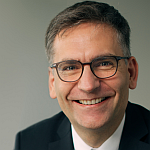 |
Artificial Intelligence is transforming software-intensive products from embedded devices to autonomous cyber-physical systems. While traditional safety engineering has been highly successful in assuring deterministic software and hardware, AI introduces fundamentally new challenges related to uncertainty, learning capability, emergent behavior, and adaptation. This keynote discusses why established safety practices must evolve and how safety engineering can be reimagined for cognitive systems. Drawing from recent advances in AI assurance, resilient system design, and safe intelligence engineering, the talk explores the transition from functional safety toward the broader challenge of assuring intelligent behavior in software-defined systems. Prof. Dr. Mario Trapp is Director of the Fraunhofer Institute for Cognitive Systems IKS and Full Professor at the Technical University of Munich (TUM), where he holds the Chair of Engineering Resilient Cognitive Systems. As an internationally recognized expert in safety assurance and resilience engineering for AI-based and cognitive systems, his work focuses on enabling trustworthy, safe, and dependable intelligent technologies. |
Wednesday, 02 Dezember 2026, 12:35 h
Language Models and Athanasius Kircher –
Genius or Charlatan? (German)
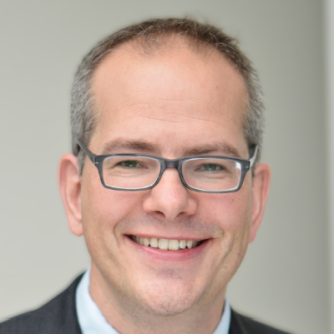 |
In the 17th century, Athanasius Kircher was regarded as a polymath. From today’s perspective, his works contain, on the one hand, astonishing theories, for example, that diseases might be caused by tiny living organisms. On the other hand, they also contain many false claims, for example, that bees are “virgin” animals that do not lay eggs. In addition, there are statements that must have been pure fabrications, such as Kircher’s “translations” of ancient Egyptian hieroglyphs. Thus, striking parallels can be drawn to large language models (LLMs): Like Kircher, these models possess a vast store of universal knowledge, understand all languages, are capable of formulating polished sentences, and can independently synthesize new knowledge through deduction. But is that enough? What lessons can be drawn from the history of science—from Athanasius Kircher through Enlightenment to the empirical principle of falsification? How should we use LLMs to avoid repeating the mistakes of the 17th century? Dr. Max Walter is a computer scientist and an expert in functional safety at Siemens Digital Industries. He plays a leading role in the design of key safety technology products, such as STEP 7 Safety Advanced, PROFIsafe, OPC UA Safety, SIMATIC Safe Kinematics, SafeVelo, and SIMATIC AX. In 2024, he was honored as “Inventor of the Year” by the Siemens Executive Board. |
Thursday, 03 December 2026, 12:35 h
Future-Proofing European Industry –
How Agentic AI Challenges Cybersecurity and Sovereignty
 |
The evolution of artificial intelligence away from passive, prompt-based assistants toward autonomous agents designed to make independent decisions, use digital tools, and engage in long-term planning presents companies with major new challenges alongside opportunities: How can such systems be effectively secured against cyberattacks and loss of control, and how can critical dependencies be managed and mitigated? For Europe, this technological leap occurs at a critical geopolitical turning point. This presentation highlights the questions companies should ask themselves regarding the deployment of agentic AI, how compliance shifts from a bureaucratic hurdle into a strategic security requirement, and the role European regulation plays in this process. Ronnit Wilmersdörffer is an expert and speaker on European AI policy. Her presentations explore Artificial Intelligence from technological, sociological, geopolitical, and economic perspectives, providing the audience with insights into the discussions at the absolute forefront of European and global AI governance. In doing so, she clearly highlights the role that facts, assumptions, and narratives play in shaping the discourse. Her keynotes seamlessly blend this conceptual lens with the essential practical relevance drawn from her daily work as a compliance officer in the AI industry. |